Invited Speakers
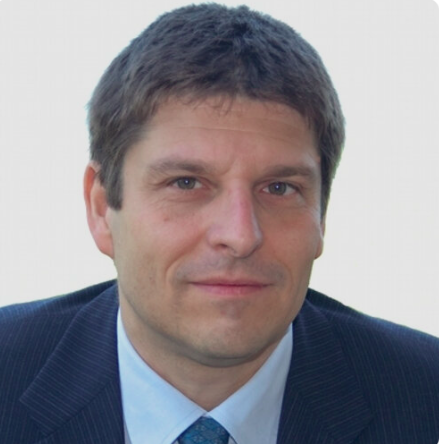
Marco Matassoni
Senior Researcher
Fondazione Bruno Kessler
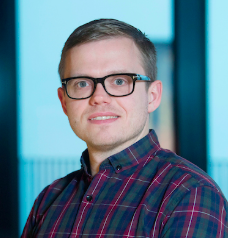
Jesper Rindom Jensen
Associate Professor
Aalborg University
Co-located with EMNLP 2026 • Full-Day Workshop
IMPACT-SPEECH is a full-day workshop focused on identifying, measuring, preventing, and assessing bias in speech-enabled large language models and multimodal speech systems.
Co-located with EMNLP 2026 • Full-Day Workshop
SpeechLLM has accelerated the shift in human–computer interaction from predominantly text-based systems to speech-enabled and multimodal interfaces. These technologies are increasingly embedded in everyday applications, enabling more natural and accessible forms of interaction. However, this rapid progress has outpaced our understanding of the limitations, biases, and broader societal consequences of such systems. These systems have been shown to exhibit and even amplify biases related to accent, speaker identity, gender, socioeconomic status, and other factors. Such biases can lead to unequal performance, exclusion of certain user groups, and unintended harms in real-world applications. Despite growing research efforts across natural language processing, speech processing, and machine learning, work on bias remains fragmented, with limited integration across modalities and disciplines.
The IMPACT-SPEECH workshop aims to bring together researchers, practitioners, developers, and end-users from diverse fields, including speech processing, natural language processing, machine learning, social sciences, fairness, and ethics, to address these challenges. The workshop seeks to foster collaboration and build a coherent research agenda around bias in speechLLMs. Through interdisciplinary exchange, the workshop aims to advance methods for identifying, measuring, preventing, and assessing the consequences of bias, while examining the real-world consequences of these systems, particularly in terms of fairness, accessibility, ethical responsibility, and societal impacts.
Senior Researcher
Fondazione Bruno Kessler
Associate Professor
Aalborg University
We invite contributions on topics of Interest that are central to the workshop theme.
All submission types are welcome at any length tier. Only Archival accepted papers will be published in the workshop proceedings. All papers will be assessed based on their relevance to the workshop themes. Archival submissions currently under review at other venues are permitted; however, to be formally included in the workshop proceedings, authors of accepted contributions must ensure their withdrawal from any other venue where the work remains under concurrent consideration.
Papers should be submitted in the ACL format following the ACL Author guidelines. The review process will be two-way anonymized; therefore, all identifying information must be removed from submissions.
Submission link: Coming soon
University of Essex, UK
JKU Linz, Austria
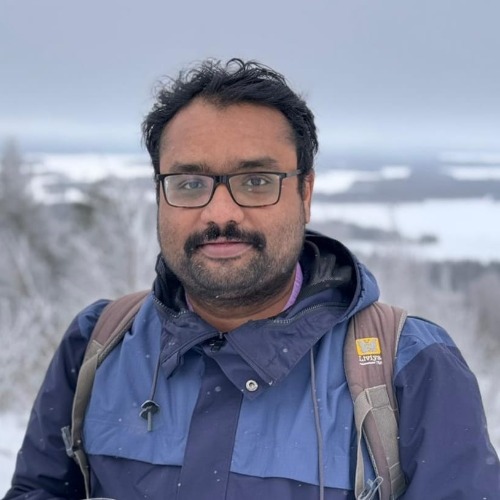
University of Eastern Finland, Finland
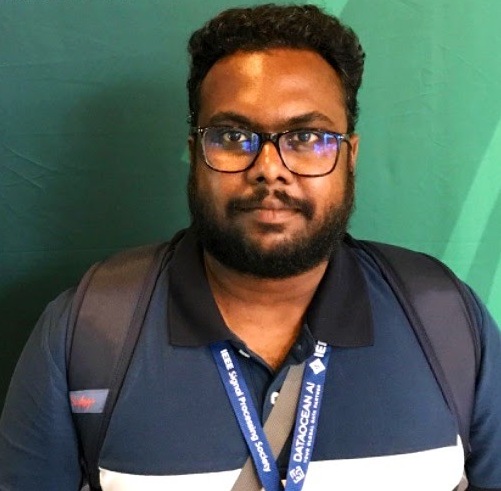
Fraunhofer IIS, Germany
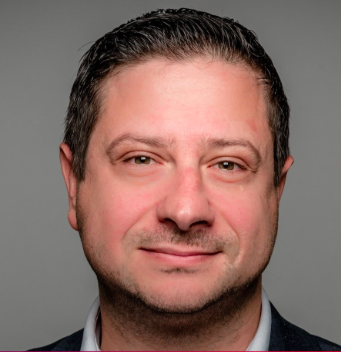
University of Essex, UK
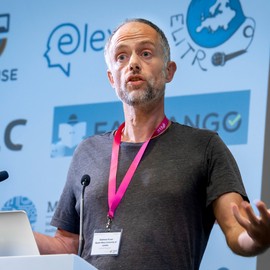
QMUL, UK & JSI, Slovenia
Mohd Mujtaba Akhtar – IIIT Delhi, India
Iqra Ali – Queen Mary University of London, UK
Sudhansu Bala Das – University of Galway, Ireland
Daniel Hershcovich – University of Copenhagen, Denmark
Parisa Jamadi – Imperial College London, UK
Vanja Karan – University of Vienna, Austria
Sandeep Kumar – MBZUAI, UAE
Yunfei Long – Queen Mary University of London, UK
Ben Malin – Brunel University, UK
Senja Pollak – Jožef Stefan Institute, Slovenia
Tanvina Patel – TU Delft, Netherlands
Orchid Chetia Phukan – IIIT Delhi, India
Priyanshu Priya – IIT Patna, India
Subhankar Roy – University of Bergamo, Italy
Markus Schedl – Johannes Kepler University Linz, Austria
Divya Sharma – IIIT Delhi, India
Shah Nawaz – Johannes Kepler University Linz, Austria
Samara Souza – Federal University of Pará, Brazil
Richard Sutcliffe – University of Essex, UK
Venktesh V – Stockholm, Sweden
Sarenne Wallbridge – UK AI Security Institute, UK
Yuchen Zhang – University of Essex, UK
Maike Züfle – Karlsruhe Institute of Technology, Germany
Tariq Yousef – University of Southern Denmark, Denmark
Eva Szekely – KTH Royal Institute of Technology, Sweden
Juntao Yu – Queen Mary University of London, UK
Reyhaneh Hashempour – QA Ltd, UK
Girish – IIIT Delhi, India
Tharindu Ranasinghe – Lancaster University, UK
Sara Papi – FBK, Italy